
A Practical Guide to Document Intelligence for Brokerages in New York
In New York, the volume and complexity of real estate documents can be overwhelming. Brokers, team leaders, and agents frequently handle contracts, disclosures, PDFs, and brokerage records, which can be time-consuming to manage manually. Th
In New York, the volume and complexity of real estate documents can be overwhelming. Brokers, team leaders, and agents frequently handle contracts, disclosures, PDFs, and brokerage records, which can be time-consuming to manage manually. This challenge not only impacts operational efficiency but also affects the accuracy and accountability of document management.
Operational Impact and Human Error
The manual handling of documents can lead to delays in closing deals, increased risk of errors, and difficulty in maintaining accurate records. For instance, a misfiled disclosure form or an outdated contract can result in legal complications and lost business opportunities. Additionally, the time spent on searching for documents can be significant, often diverting agents from more value-adding tasks.
Introducing Real Estate Document AI: A Practical Approach
Searchable document intelligence can significantly streamline this process. By leveraging AI, brokerage teams can quickly search, categorize, and manage documents, ensuring that all necessary paperwork is easily accessible and up-to-date. For example, an AI system can automatically tag contracts and disclosures with relevant metadata, making it easy to find specific documents quickly.
Imagine a scenario where a real estate agent needs to review a client’s disclosure form. With an AI-supported system, the agent can simply search for the form by date or client name. The system will then retrieve the document from the database, ensuring that it is the most recent version. This not only saves time but also reduces the risk of using outdated or incorrect documents.
Human Review and Implementation Considerations
While AI can automate many tasks, it is crucial to maintain human oversight. AI systems should be used as a tool to augment human judgment, not replace it. For example, an AI system might flag a contract for review based on certain criteria, but a human agent should still verify the accuracy and completeness of the document before finalizing it.
Conclusion
Implementing searchable document intelligence in New York’s real estate brokerage can significantly enhance operational efficiency, reduce errors, and improve record-keeping. By leveraging AI to manage documents, brokers can focus on providing exceptional service to their clients while maintaining compliance and accuracy. This approach ensures that all documents are easily accessible, up-to-date, and ready for review, ultimately leading to smoother transactions and better client satisfaction. By embracing real estate document AI, brokerage teams can stay ahead of the curve and provide the best possible service to their clients.
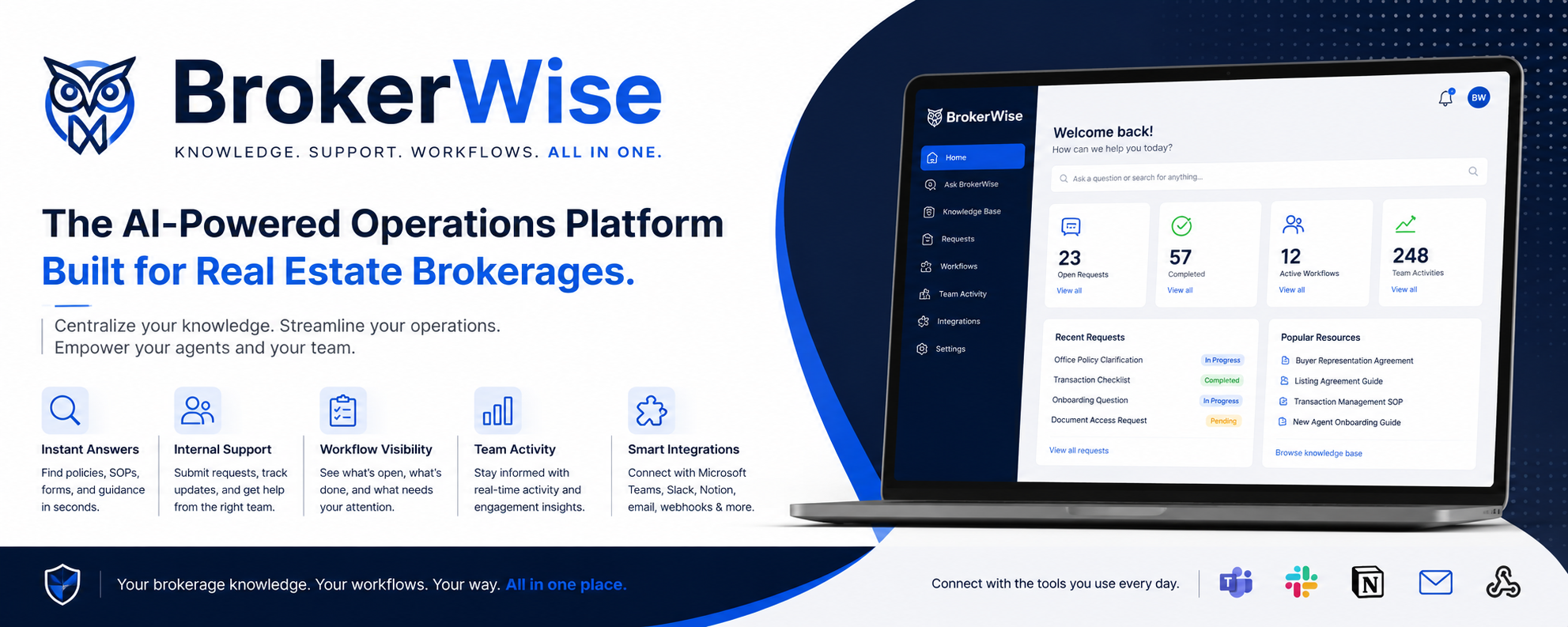
BrokerWise Real Estate AI Workspace
BrokerWise helps real estate teams manage AI requests, documents, lead routing, and brokerage workflows from one workspace.
Schedule a BrokerWise Demo | Read BrokerWise Docs
Original source: http://192.168.0.190/blog/?p=436
Turn real estate knowledge into working intelligence.
BrokerWise centralizes brokerage knowledge, internal support, workflows and team activity in one AI-powered operations platform.