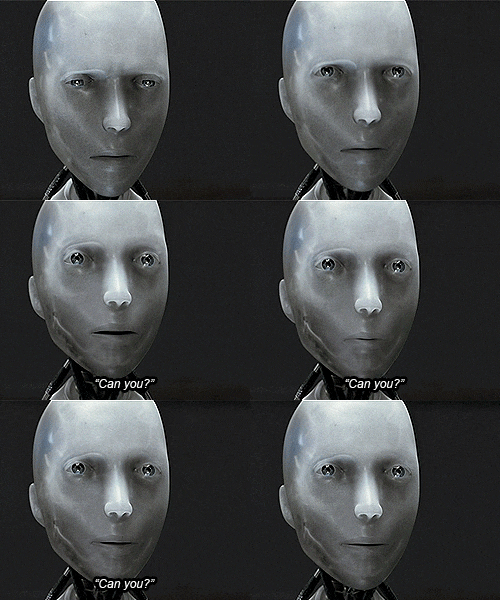
In the realm of science fiction, few works have had as profound an influence on our collective imagination as Isaac Asimov's "I, Robot." This seminal collection of short stories, published in 1950, not only captivated readers with its tales of human-like robots but also sparked a global conversation about the potential role and impact of artificial intelligence (AI) on our lives.
Asimov's "I, Robot" introduced three fundamental laws of robotics that have become cornerstones in discussions about AI ethics. These laws—a robot may not injure a human being or, through inaction, allow a human to come to harm; a robot must obey the orders given it by human beings except where such orders would conflict with the First Law; and a robot must protect its own existence as long as such protection does not conflict with the First or Second Law—have shaped our understanding of how AI might be controlled and managed.
Beyond these laws, "I, Robot" also served to popularize the concept of artificial intelligence in the public consciousness. The stories presented a future where robots were an integral part of everyday life, from household helpers to space explorers. This vision not only captured people's imaginations but also fueled research and development efforts in AI and robotics. As we continue to make strides in these fields, the legacy of "I, Robot" remains a powerful reminder that our relationship with artificial intelligence is one that demands careful consideration and thoughtful regulation.
In conclusion, Isaac Asimov's "I, Robot" has had an enduring impact on technology and society. By exploring the potential benefits and challenges posed by AI-powered robots, it sparked a global conversation about how we might navigate this brave new world. The three laws of robotics introduced in the collection have become touchstones for discussions around AI ethics, while the book's portrayal of a future where robots are an integral part of everyday life continues to inspire researchers and innovators alike. As we move forward into an increasingly automated age, "I, Robot" serves as both a cautionary tale and a call to action—one that reminds us of our responsibility to shape the development of artificial intelligence in ways that benefit all of humanity.