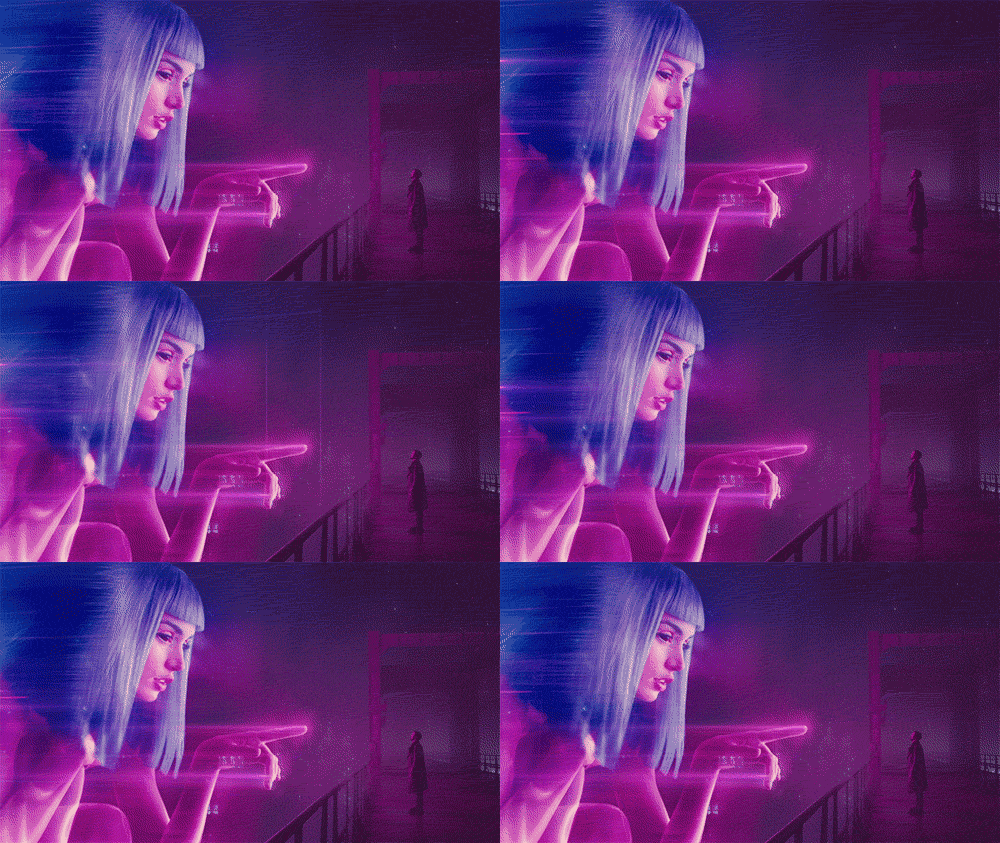
Blade Runner, released in 1982, is a science fiction film directed by Ridley Scott that has left an indelible mark on popular culture. The movie's dystopian setting and complex characters have sparked numerous discussions about the social implications of its themes. One such theme is the blurred line between humans and artificial beings, also known as replicants in the film.
The concept of replicants raises questions about identity, autonomy, and morality. Are these synthetic beings any different from us? Can they experience emotions like love or hate? These questions challenge our understanding of what it means to be human. The movie suggests that there is no clear-cut answer; instead, the line between humans and replicants is fluid and subjective.
Another significant social implication explored in Blade Runner is the impact of technology on society. In the film's world, advanced technologies have led to overcrowding, pollution, and a widening gap between rich and poor. This reflects our own fears about how unchecked technological progress might reshape our societies. The movie warns us that while technology can bring immense benefits, it also has the potential to create new forms of inequality and exploitation if not managed responsibly.
In conclusion, Blade Runner offers a thought-provoking exploration of some of society's most pressing issues. Its themes continue to resonate today as we navigate an increasingly complex world shaped by rapid technological advancements. By engaging with these questions, the film invites us to reflect on our own values and beliefs about what it means to be human in an age of artificial intelligence and automation.