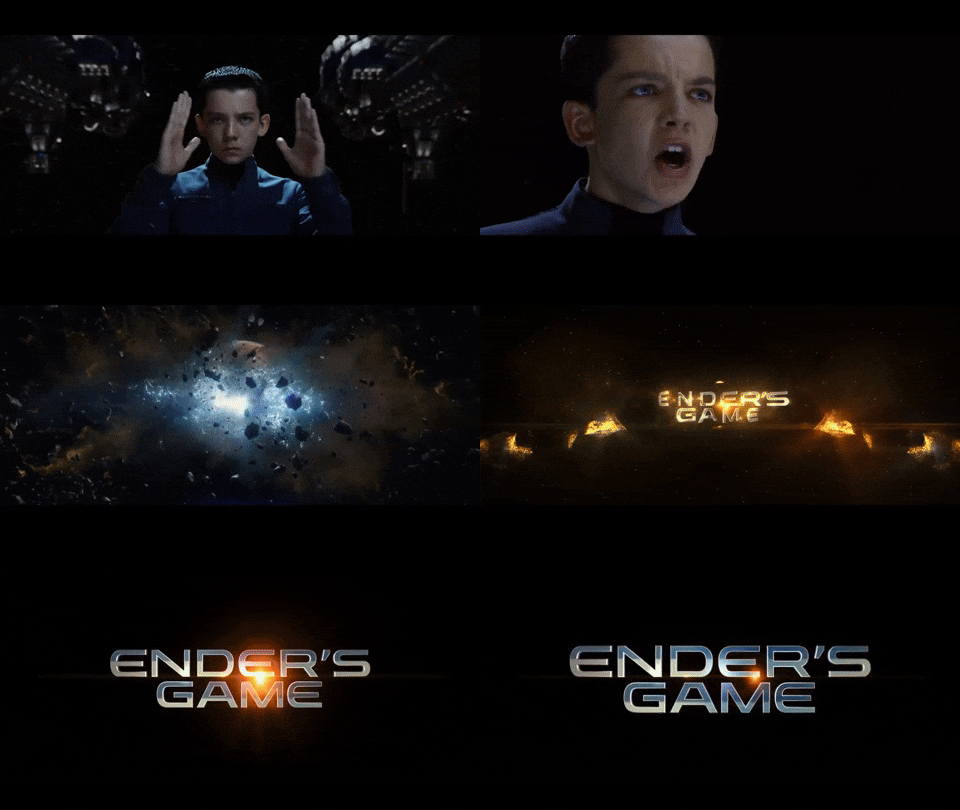
Ender's Game, written by Orson Scott Card, is a novel that explores the complexities of warfare, leadership, and morality. The story follows young Andrew "Ender" Wiggin as he is trained to become a military leader for Earth in an interstellar war against an alien race known as the Formics. Throughout the book, Ender faces numerous ethical dilemmas that challenge his moral compass and force him to question the actions of those around him.
One significant ethical consideration in Ender's Game is the use of children as soldiers. The International Convention on the Rights of the Child states that "a child means every human being below the age of 18 years unless under the law applicable to the child, majority is attained earlier." However, in Ender's world, children like Ender are trained from a young age for warfare due to their strategic thinking abilities. This raises questions about whether it is ethical to expose children to such violent and traumatic experiences at such a tender age.
Another important ethical issue presented in the novel is the concept of "the other." Throughout history, wars have often been fought based on prejudice and fear of those who are different from us. In Ender's Game, this theme is evident when humans wage war against the Formics, whom they perceive as an alien threat. The question arises: Is it ever justified to go to war against another species simply because we view them differently or consider them a threat?
In conclusion, Ender's Game presents several thought-provoking ethical dilemmas that challenge our understanding of morality and the consequences of our actions. As readers, these questions force us to reflect on our own beliefs about warfare, leadership, and humanity's place in the universe.