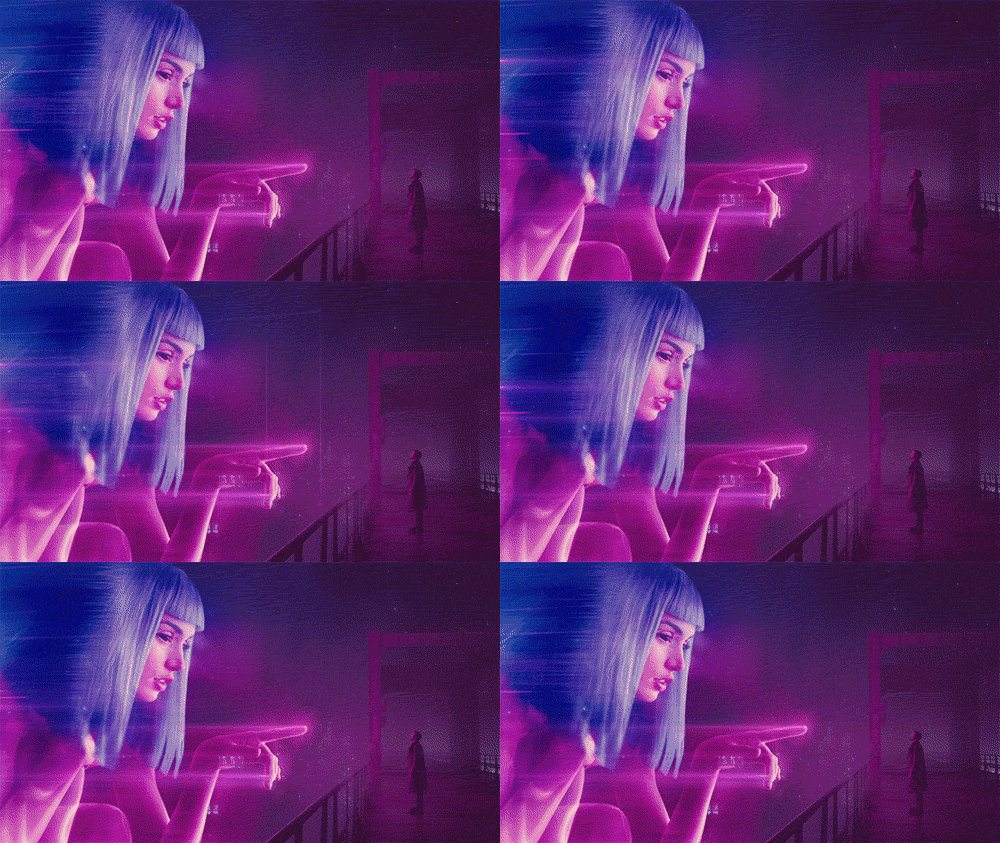
Blade Runner, released in 1982, is a science fiction film directed by Ridley Scott that has left an indelible mark on popular culture. The movie's themes and visual style have influenced countless films since its release. However, beyond the stunning cinematography and groundbreaking special effects lies a deeper exploration of social issues that still resonate today.
One of the most prominent aspects of Blade Runner is its portrayal of artificial intelligence (AI) and human-like robots called replicants. The film raises questions about what it means to be human, exploring themes such as identity, empathy, and morality in relation to these advanced beings. It challenges us to consider whether machines can truly possess emotions or if they are merely programmed to mimic them.
Another significant social implication of Blade Runner is the dystopian future it depicts. The film paints a picture of overcrowded cities, pollution, and economic disparity between corporations and citizens. This serves as a cautionary tale about the potential consequences of unchecked technological advancement and corporate greed. It encourages us to reflect on our own society's reliance on technology and consider how we can ensure that progress benefits everyone rather than just a select few.
In conclusion, Blade Runner offers thought-provoking insights into issues such as AI ethics, the impact of technological advancement on society, and the importance of empathy in an increasingly automated world. By exploring these themes through its captivating narrative and stunning visuals, the film continues to inspire conversations about our own relationship with technology and what it means to be human in a rapidly changing world.